


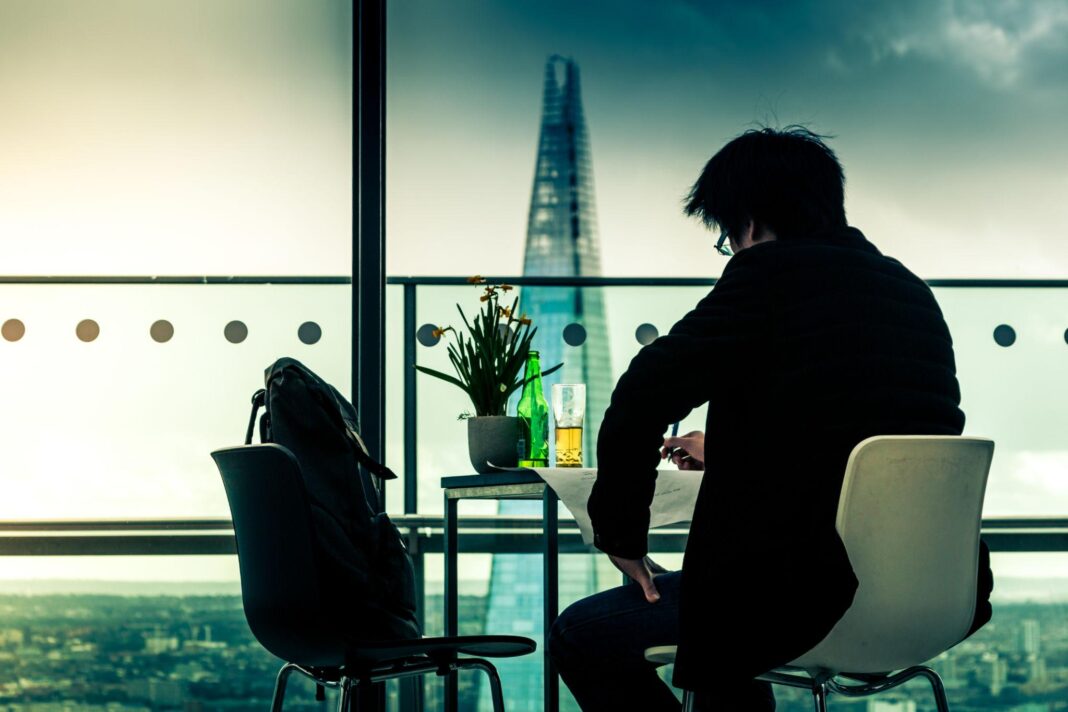
In today’s fast-paced cities, masculinity is no longer defined by dominance, visibility, or public recognition. Instead, a quieter shift is taking place — one shaped by time, privacy, and personal control.

6
Across major urban environments, men are adapting to a new set of pressures. Long working hours, constant connectivity, and densely populated spaces are changing how identity is expressed. Rather than standing out, many are choosing to operate with precision — managing their time, interactions, and personal boundaries with intent.
This is not a movement driven by ideology. It is a response to environment.
Redefining Masculinity in the Modern City
In crowded cities, traditional markers of masculinity — status, attention, and visibility — are losing their relevance. With millions of people sharing the same space, anonymity has become the norm.
As a result, masculinity is increasingly defined by how effectively a man navigates daily life.
Key traits emerging in urban environments include:
- Selective engagement rather than constant social exposure
- Clear separation between personal and public roles
- Preference for structured, predictable interactions
- A focus on autonomy over external validation
These are not abstract ideals — they are practical adaptations to modern living.
Time as the New Currency
For many men, time has become the most valuable resource.
Between demanding careers, commuting, and personal responsibilities, there is little room for inefficiency. Decisions are made based on how well they fit into existing schedules, with a strong preference for reliability and minimal disruption.
Independence is no longer about having no commitments — it’s about having control over how time is spent.
Privacy as a Skill, Not a Luxury
In urban life, privacy is not about isolation. It’s about control.
Men are learning how to navigate shared environments while maintaining clear personal boundaries. Knowing when to engage, when to step back, and how to manage interactions discreetly has become a defining trait.
This shift reflects a broader move away from performative behaviour towards intentional living.
Lifestyle Choices Driven by Function
Consumption habits are also evolving.
Rather than chasing status symbols, many men are choosing experiences and services that align seamlessly with their routines. The focus is on:
- Predictability
- Efficiency
- Low cognitive effort
- Controlled exposure
This applies across everything from entertainment to social interactions. The goal is not excess — it’s balance.
Experience Over Attention
In highly competitive cities, public displays of success are becoming less effective.
Instead, value is placed on private experiences that deliver satisfaction without external validation. This reinforces a more self-directed approach to identity — one that doesn’t rely on being seen or acknowledged by others.
Changing Social Dynamics
Urban environments are also reshaping how people interact.
With high population density comes shorter, more direct interactions. Many men now prefer clear, structured communication where expectations are understood upfront.
This reduces uncertainty and allows for smoother navigation of complex social landscapes.
Clarity, in this context, is not about detachment — it’s about efficiency.
The Role of Digital Life
Online platforms are reinforcing these same behaviours.
Digital spaces allow men to control their visibility, choose when to engage, and manage interactions on their own terms. This level of control mirrors real-world urban living — where presence is selective, not constant.
The ability to regulate communication digitally is becoming a key part of maintaining balance in modern life.
Conclusion
Masculinity is not disappearing — it is evolving.
In cities, it is no longer about performance or perception. It is about function.
Defined by time management, privacy, and intentional decision-making, modern masculinity is shaped by the realities of urban living. It exists not in grand gestures, but in everyday choices — quiet, controlled, and adaptive.